Sunday, 26 November 2017

What's on a website homepage

Michael Jackson's website 

Websites serve record labels as a source of profit from online consumption of their stars' products and a method of distribution. With the new media being the dominant marketing system, websites are essential to maintain the audience's awareness of an artist and his or her texts. Due to their interactive design websites allow the audience to do the following:
- to purchase albums, concert tickets and merchandise of a star
- to share the information on their experience of consuming a star with a wider audience through social networks and other ways of commenting
- to become aware of other products of the record label, including different artists, with the advertising placed on the websites

The shopping section 

For a website to be efficient it needs to contain the following elements:
- the presentation section which would promote the artist with artworks, music videos, blog posts and other informative concepts that increase the audience's demand for a star
- online shopping section where the audience would be able to buy the star's merchandise and tickets for concerts
- discussion/commentary section with the help of which the audience would be able to spread the demand for a star

I am now going to analyse Avicii's website, because he is an artist who performs in the same genre as the one chosen by my group.


The homepage has a minimalistic design convenient for the electronic genre due to the multiple possible variants of interpreting its music. Because many texts do not include lyrics but just sound compilations, generic conventions of the genre are based on allowing the audience to construct their own perceptions of texts. Abstractionism present in websites' artworks and other related designs adheres these conventions by engaging the audience's imagination. The use of shapes and colours may also connote some information on the content of the artist's work, for example the contrasting colours of black, white and gold on this page connote the diversity in Avicii's music.

The homepage also provides the information necessary for promotion of the artist. It has his logo in the top section and his name at the bottom and on the right. The right top corner contains a clear label with the methods of sharing information about the artist and thus increasing the public demand for him. The same area contains the "documentary" section which allows one to find out more about Avicii's work and background, as well as the "shop", which give the opportunity to purchase Avicii's products. By learning about the artist the audience associates with him or her, and therefore their demand for his merchandise increase. Online shopping for concert tickets and merchandise is the main source of profit for the record labels.


By swiping down we get to the next page, where the focal point is Avicii's photograph. By being able to visually recognise the artist, the audience develops stronger association with the star and wants to find out more about him or her by consuming the related products. This incentive to complete the star image is the main reason for the formation of the audience's demand, and by maintaining the incoherence of the image the music industry provides ultimately unsatisfying information that drives the audience towards further attempts to get more knowledge about the artists, for example by attending concerts and watching music videos. 


The personalised message on the following page okays the same role: it strengthens the audience's association with the artist by making it seem as if they are individually important for the star. The use of Helvetica font makes the message appear neutral, because this is the most used font in the modern marketing, which means that it has no particular associations and allows the audience to contemplate the text independently, which makes it more personal as well as adheres the electronic generic convention of engaging the audience's imagination. The font also continues the futuristic style of the website, because Helvetica was developed recently. 

This is the draft of a website that I am in the process of creating for our made-up artist Ronnie Rayman: 


The homepage contains all the information required for the audience to acquaint with the star, share their impression of him and purchase the main source of profit for record labels - the show tickets. Contact details ensure that the audience will be guided in the consumption of texts. 


The "shop" section allows the audience to purchase merchandise. We included three of the most popular types of products: a souvenir, two physical copies of an album (one being a vinyl and the other a disk recording) and a digital copy. 


The "blog" section provides more information on the star so that the audience would associate with him more and develop greater demand for his products. It also advertises products in the form of a newsreel, for example by announcing an upcoming release of a music video and building the public hype for it. 


Annotations of my album artwork

After a week of working on individual designs, our group met to provide feedback for each others' work. My individual design received a positive reaction from the other group members, but we decided to choose a different one for the following reasons:
- mine is difficult to materialise because it requires a photoshoot with several people, which would be challenging to organise considering how busy this part of the school year is
- electronic genre is associated with abstractionism, and the group preferred a more minimalistic artwork to mine. Instead of using my realistic approach, we decided to concentrate on symbolism that was stronger in others' works.
- I played with light and darkness when assembling the design, so much of its images contain black, empty space or only blue light. Other group members felt that because of the style of our song it needed a more colourful and elaborate cover.


Nevertheless, some of the features in my artwork were considered to be used in our final cover. My version had the strongest emphasis on the artist and thus was most effective in constructing the star image. The audience could easily recognise what star, as a commodity, they are consuming. Subsequently, the front cover of our chosen album artwork was modified to have the face of the artist.

As for the most popular artwork of our group, we unanimously chose this one:


It is going to be changed so that the artist's face is more recognisable in order to contribute to the construction of the star image, but otherwise it contains all the elements suitable for our song. The red colour was dominant in our music video, so it makes sense to continue it in the artwork. The minimalistic design is both preferred by the group's majority and features in many other products of the genre. Thus, the target audience would be attracted by it since they will expect that the album's content will align with their preferences. The humorous face expression and the overall light-hearted mood that the cover connotes would be popular with our young target audience, because young people are likely to have a simple and elevated attitude to life.

The image of glasses and a bowtie became a symbolic outfit for our artist. Aidan is planning to have a photoshoot with Ray for which he will wear these items, and I will add the photos to the blog section of the website. 

Friday, 17 November 2017

Looking at similar album artwork

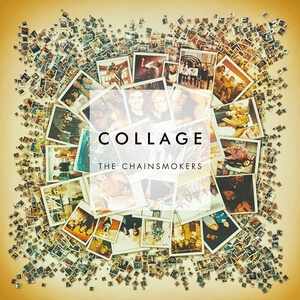
Before designing individual artworks for the album of our artist, we analysed the artworks used by other artists of the genre to understand what generic conventions persist. The albums we chose for the analysis of generic conventions in music videos were Stories by Avicii, Collage by Chainsmokers and Animals by Martin Garrix, so these are the ones I will also use for the analysis of designs.


Unlike most album covers, the front of Collage doesn't have a distinct image of the artist. Although the two DJs of Chainsmokers are present on the photos that make up the artwork, it would not be possible for the audience who are unaware of the musicians' appearance to tell who of the depicted people are the artists that the record label is trying to sell them. Here are the examples of other famous electronic artists who still have visuals of themselves on their album covers despite their popularity: 

Moby


Deadmau5 (the artist wears the mask of a mouse when he performs on stage, thus the helmet represents himself)


Nevertheless, the cover adheres all the generic conventions of the electronic. Abstractionism is common in album designs of the genre because of the frequent lack of lyrics and the high diversity of the sound which give the audience several alternatives for its interpretation, in the same way that abstract art can have various effects on visual senses of observers. The symbolic conventions are further adhered by the use of colours; the compilation of bright dyes aligns with the colourful style of many works of the genre, because the electronic music is associated with nightlife and excitement. This way, the design creates interest of the Chainsmokers' target audience as they become aware of the album's content and willing to consume it as they believe that their expectations of music in the electronic genre will be fulfilled.

The Collage design constructs the image of the star as a commodity by providing limited information about the artist and incentivising the audience to consume the star's products to complete their knowledge about the star. In this way, the star image built by the artwork benefits the record label in a way that it ensures that the audience continually buys its merchandise. 


This is the front cover of Avicii's Stories. The biggest difference between the generic conventions of the design for Collage and for Stories is in the artist's presence, which is a feature that is effective in raising the public awareness and increasing consumption, and thus is implemented in the majority of album designs of the genre. The greater spectrum of colours connotes that Avicii's music is more fast pace and intense in nature than the Chainsmokers'. The costume he wears intents to attract attention of his target audience by imitating the style of their outfits and indicating that Avicii's mindset is similar to theirs and therefore his products would satisfy their preferences.


The cover of this album by Martin Garrix adheres the generic conventions of the surreal nature of the electronic music. The design reflects the album's content by symbolising it with a roaring lion, informing the target audience that this is the music they demand. The use of the contrast between white and black adheres the symbolic convention of the genre in its association with the nightlife. Although it doesn't include an image of the artist, his name is easily distinguishable together with the album's title. The record label may consider this information enough to create demand for the product, considering the existence of the artist's high popularity. 


Tuesday, 14 November 2017

Individual artwork design

After completing the post-production work on our music video our class moved on to learn about the distribution in music industry. The first concept that we looked at was the album artwork, which creates the audience's first impression about the artist's or the band's products and thus plays a major role. We were tasked to individually design artwork album covers for the artists who we created in groups, so that we could later present our ideas to the other group members and construct the best variant of an album cover based on the ideas that we developed separately. These drawings represent the design that I came up with:


This is the front cover of the album. Unless the artist already gained the high level of popularity where he is recognised just by his appearance, the front cover should have the name of the artist and the title of the album to increase the star's recognition and develop the consumer's brand loyalty to the record label. We came up with the album's title: Waves, because we believe it connotes the diversity of electronic music in rhythm, pitch and composition. It is the most flexible genre in the contemporary musical culture.


The inside left part of the album cover shows all the songs that the album includes to increase the possibility that they will be consumed in different methods, such as through the new media.   


After the content side there is a spine which allows one open the album and see the inside left and right parts.  


This is where the disk with recordings will be. The drawing shows two rows of projectors emitting blue light, which are situated in front of each other so that they make sides of a road that goes forward into the dark. The blue colour which is the highlight of the design relates to the name of the album, creating an association with water. The darkness, projectors and smoke, which I could not show with a hand drawing but which would fill the space, connote the symbolic generic convention of the nightlife. Multiple products related to electronic genre include concepts such as nightclubs, parties or lit up city streets. Thus, by using the projectors as props and creating a colourful lighting I adhere the generic conventions and increase the chance of fulfilling the demand of our target audience, who are likely to be willing to see these concepts in the products of the electronic genre.         


The idea for this image came to me when I saw this picture: 


I am not sure whether I illustrated my intention clearly by the hand drawing, so I will include the reference as well. In this design the blue colour persists in the light that goes through the window and is reflected from the smoke. The image adheres symbolic generic conventions because multiple electronic products base their style on abstract imaginary. Because of the lack of action in performance, which is more passive than one of a star who uses live instruments instead of digital packs, and the absence of lyrics in the texts, the electronic artist use symbolism to represent their creativity. The image of blue light filling a foggy room has a surrealistic note to it, and can be interpreted by the audience in a way that would make the artist's texts appear more moody and enhance the interest of consumers. 

The bottom right corner of the design includes the legal information that would protect the record label's property and the barcode that would make the purchase of the album possible.


Saturday, 11 November 2017

Behind the scenes video

I made a video that combines all the backstage footage that we took during the shoot of our music video:

Friday, 10 November 2017

Shoot day evaluation

The evening before the shoot day my group and I brought all the costumes and props to our Media classroom to make sure that they will be easily available. We then went to the studio to build our set:


In three hours the set was ready. The following morning our group met in the editing suit, all excited, and started to instruct the arriving performers. We were well organised, however one of the back vocal singers had a different size to the dress that we ordered for her, hence we started fifteen minutes later than intended as we had to find a substitute. The other actors were present at the earlier rehearsal and knew what was expected of them, so without much discussion we started rolling.


I think we did quite well in creating the image we needed for our concepts. The set design was similar to what we intended when we came up with the idea. The stage looked realistic despite the limited space we had and by correctly positioning people at the tables we managed to make an impression of a crowd, although in reality it consisted of four people.

As a director I called the shots and answered the questions the actors had about their performance. Nevertheless, I attempted not to interfere with the production process if there did not seem to be any issue requiring my attention. By keeping the process going rather than striving for perfection our group was working efficiently, without spending time and energy on unnecessary aspects. As a result, we finished filming the band scene right on time and moved on to the other two elements. 


I also did some camerawork and assisted the filming process by moving the equipment, holding the playback and doing the general administrative work, which means organising the actors and making sure that the crew does not fall behind on the schedule. 


The first problem that we encountered when shooting was that our punchbag was left in a boarding house. The original plan was to go back and bring it over to the campus over the lunchtime, but we were now short on time to do that. We decided to use what we had on the campus instead. We borrowed boxing pads from our school's head of sports and asked our Media teacher to play the role of a coach. 


Filming the ballerina was probably the most successful part of the shoot, since despite the limited timeframe we managed to get multiple quality shots. This was mostly due to the high skills of the performer; she carried out everything we asked of her and also provided some improvisation. 


Overall, I think we were very productive in our work. I wish we had more time for the boxer; although we got all the necessary shots we did not manage to use the dolly. However, for that to happen I would had to pace the crew, maybe ask people to miss the lunch, which means the process would be stressful and greater tiredness could cause technical mistakes; for example the cameraman could miss the optical focus or lights could be broken as people would drop them from lacking concentration. This would weaken our cooperation and we would not be able to keep up the teamwork that we managed to construct. 

Our actors did very well, especially the lead singer and the ballet dancer. They required minimal information from me to understand what they had to do in each scene. The performance element included the most people and needed the most direction, thus I found filming it the most enjoyable. 


I hope that Kristien kept in mind all the editing features that we discussed, such as matching the movements of the boxer and the ballerina. It is also important to time the appearance of the boxer and the ballerina right, otherwise the audience will be bored by the excessive shots of them. I am looking forward to seeing how the three actions will be correlated in post and viewing the overall campaign, which was made in the same style with the music video.

One thing I learned is that, as a director, I sometime have to take action independently from the other crew members in order to set the best conditions for the group work. For example, I could have started to deconstruct the set myself, but because I first wanted to settle all the aspects of the upcoming scene with the rest of the crew I wasted the time which we could later use for additional shots of the boxer. In the future shoots I will make sure to do everything possible to guide the production process more firmly to make it more efficient. 


Thursday, 9 November 2017

Role on set and research of role

The four key roles on our production day will be:

- Producer, who is responsible for overseeing all aspects of the shoot, organising the other members of the production team and ensuring the smooth running of the shoot results in effective execution of the objectives.

- Art director, who is responsible for location, props, costume , make up and continuity in the set design

Director, who is responsible for organising and instructing the actors.

- Sound playback, who is responsible for high quality playback of the song.

- Lighting desk, who is responsible for the quality of lighting.


We decided that Kristien Alexandersen will be responsible for administration of the shoot, therefore his tasks will combine all organisational roles, namely the producer, the art director and the sound playback. Aidan will be the cameraman because he is knows how to operate a BlackMagic. I will direct, because I have a bit more experience in working with actors.


My role requires planning out each of the shots in preparation and thinking of the ways how to best communicate with the performers. I will also have to learn the schedule to make sure that the shooting is going on time.

I will need the shot-list and the storyboard with me on the day to reference to them when arranging the shot compositions and instructing the performers.

I feel high responsibility because I will be the leading figure during the shoot, and the quality of the footage will depend on my actions. It will be up to me to give out instructions and keep the process going, despite unexpected circumstances that may appear in the short term.


The biggest difficulty I expect is directing Oriana in the dancing element. Although she is a professional dancer it is possible that she may become confused by our expectations of her performance. To overcome this challenge I will spend some time analysing the references that Kristien gave her and think of the best instruction I can give without putting her off.

Since we are making a music video, as a director I have to consider that the artist is portrayed in the most interesting way for her or his target audience. According to Dyer Star's Image, stars are commodities and have to be shown in a way that raises the most demand for them. The incoherence of the image ensures that audiences continually strive to "complete" or to "make sense" of the image by continuously consuming their products. Thus the performance of the band should be exciting and promise the completion of the image, but slightly unsatisfying in order for the audience to continue consuming the artists' products to order to carry on attempting to complete their image. I will do it through a sequence of shots that will portray the performance element in an unusual way but won't show the artist for exceedingly long so that the interest to them would decrease due to the repetition.


To ensure the interest of the target audience I will employ the generic conventions. Symbolic conventions of a fast pace, energetic performance will be achieved through my directions of the actors, and the exciting set design of a jazz club connotes the fun locations that are expected to appear in electronic genre music videos. Technical generic conventions will be applied with the camerawork (e.g. low angles of the artist so that he will look confident and influential), the lighting (such as the colourful lighting of the jazz club which connotes the party lights shown in many videos of the genre) and the use of colourful imageries of the costumes, props and the make up to construct the fun and diverse visual effect that is common in electronic music videos.


Our target audience is male with the age range from 17 to 19 years. I therefore will make sure that our video has enough shots of the beautiful female backup vocal singers and that the ballerina's performance will look elegant. Other music videos of the genre dedicate a lot of their content to sexually related concepts, so a depiction of physical beauty in texts of this branch of the music industry is expected by the young audience.


How to edit a music video

On Friday, the second of November our class had a lecture where we were told the basic principles of editing a music video. Although we went through some of these methods the previous term, it was helpful to be reminded of the ways to make post-production most efficient.


These are the main stages of editing a music video:

Syncing
One can sink the footage with the song by using an iPad with an application analogical to a clapperboard. To do it one needs to import the clapperboard clip of the song, then drag the actual footage over the clapperboard layer and check that the numbers on the clapperboard in the footage and in the separate clapperboard layer are the same.

To sync the materials with the use of sound, one needs to find the snare drum in the beginning of both clips by using arrow keys to move frame by frame and place the footage above the clapperboard clip on the timeline.

Editing the Performance
It is quicker to edit the complete performance element first and then add footage to it to introduce the other elements. To do it, one needs to organise the layers by naming each one accordingly (e.g. "guitar", "bass guitar", "drums" etc.) and duplicate the whole timeline in case if changes will have to be made. The first line of the singer should be on his/her close up.

When editing choreographed elements, attempt "graphic match", which means that the motions between the shots should correlate - move in the same direction or to be visually similar.

Once the performance element is done add the shot of the other two elements by importing them into the cut out parts of the performance.