Thursday, 29 September 2016

The Second Camera Workshop

On 21st of September our class had another practical with the Black Magic cameras and equipment.

 This time we were introduced to the 180 degree rule. It is a cinematography guideline that states that two characters or objects in a scene should maintain the same left/right relationship to one another. Crossing of the line results in passing over the invisible axis connecting the two subjects and the shot becoming a reverse angle. This is usually disorientating and distracting for the audience, so it is recommended to avoid crossing it. However, there are many cases when the line can be intentionally crossed to achieve a desired effect.


The order in which shots are filmed is from wide to close. It is faster to set up a wider take and use
it for adjustment of the closer shots afterwards. Each take the actions of the actors, whether they are in or out of the frame, must be the same. This is called continuity and is essential for avoiding mistakes. Neglect of this rule can lead to multiple visual and sound inaccuracies.

There are several call outs used on a set in purpose of orientating the crew when the filming is about to begin. The first one is "Picture's up!", it indicates that you are getting ready to shoot. During rehearsals a common call would be  "Rehearsal's up!". Then it is "Roll sound!" and "Sound speeds!" to start the recording and quiet down the cast. The director would then call "Stand by!", "Camera rolling!" and "Action!", expecting to get a response from the cameramen after the first two shouts, such as "Standing by" and "Rolling". "Action" signals the actors to start performing. When the scene is done the director calls "Cut!" indicating the end of filming.


Actors often require marks in the acting area made with tape or other unnoticeable materials to specify their positioning. Correct placing is essential to keep up with the rule of continuity and achieve a pleasant series of shots. Marks also ease the actors' tasks by reducing the amount of information they have to remember.

Two simple, frequently made mistakes which result in not getting enough footage are starting to shoot too soon and ending too early. These lost few seconds can make a difference in editing and overall effect of the shot. The solution is to follow "Camera Roll!" call and start filming before the call for action, and keep it working after the scene until declaring cut.

It is advised to avoid watching of the footage back on the set, because it consumes the time arranged for shooting. Playing of the records attracts actors and the rest of the crew to see their work; this brings everyone out of their positions and results in disorganization. It takes a while to rearrange the members and get ready to continue.

In the end we were asked to film three or four scenes to practice with our new knowledge and create some footage for the next lesson on editing. It supposed to be a simple action which we recorded four times in four different zoom levels. 


We started from a long shot of Oriana, then took a mid-shot of her and ended on a close up of her hands. 


Wednesday, 28 September 2016

Movie Posters

The Silence of the Lambs


One can quickly tell that this poster is of a thriller or of another movie which genre relates to suspense. Its dominating colours are white and black; they both associate with death and create a sensation of the sinister presence. The title is in red, which relates to violence, more specifically blood. And of course there is an insect with a mark looking like a human skull in the centre of the picture.

These signs make the first impression on the audience to clarify that the plot will be dark and frightening. However, there are some less obvious factors of the poster which complete its mise-en-scene. The combination of dark brown colours creates feelings of depression and despair. There is a bit of yellow right in the centre which helps to grasp the visual focus of an observer; yellow colour is the most noticeable. The girl’s white skin aligns with the paleness of a corpse. Her eyes are widely open, still and emotionless. The presence of a large, fury mole on her lips arises disturbance and disgust, which she doesn’t express as a normal person would; her facial expression is absolutely flat. The light divides the image into the visible part and the area covered by the girl’s shadow; such sharp, bright lighting is similar to those used in morgues. Together these details persuade that the picture is of a dead body. Because girls are generally more fragile and kind than men, the audience considers her to be an innocent victim and is thrilled by the injustice of her death. The darkness which surrounds her head makes her character mysterious.

The face used for the shot, which I assume belongs to Jodie Foster, is very pretty despite that not all of it can be seen. After observing the actress’s sharp chin and cheek bones, narrow eyebrows and neat nose, one gets the desire to see her in motion. Beauty always attracts attention and causes interest, especially when put in such contrasting contexts as death and hostility.  Her eyes are red, this confuses since she was assumed to be a victim, but the red eyes are associated with villains, so it creates another small intrigue and a reason to watch the movie.

Since it is the most popular Jonathan Demme’s thriller and worldly approved classic, the poster’s effects on the modern public will be limited by increasing its excitement before the review (because generally the spectators will already be familiar with the characters and the storyline). Back in 1991 however, when nobody yet heard of Dr. Hannibal Lecter and people knew only that the movie is about psychos and cannibalism, such an unusual design of the announcement poster should have caused appearance of many questions related to the plot, intrigued the viewers and attracted a lot of attention, which is the main purpose of the first poster. It is a perfect example of how the mise-en-scene is used to interest the public before the product’s release, so the sales are higher when it enters the market. The title “from the terrifying best seller” suggests that it is a high budget and a high quality movie if it was permitted to use a successful novel for its storyline. This increases the public’s expectations and improves the ratings of a film. Clearly written names of the popular actors prove the same point; Hollywood stars would not agree to participate in something that could worsen their reputation. They also attract fans and help to win the competition for consumers against films with less promoted casts.


Friday, 23 September 2016

The Camera Workshop 14/09/2016


The last Wednesday we learned the basic principles of handling the filmmaking equipment. The cameras used in Hurtwood Media Department are Black Magic USRA Mini. They film in 4k and allow interchangeable lenses.


To avoid causing damage to such expensive devices, we were told the “yours” and “mine” rule. Each time a piece of equipment was passed, the person giving it said “yours” and did not let go until the accepting student replied “mine”. This principle prevented the equipment from falling due to the lack of attention from one of the partners. Then we fixed and adjusted the cameras on tripods, as another safety we were to fix and adjust the cameras on tripods, as another safety measure. Black Magic tripods have a spirit level, which makes tilts and pans of the tripod’s head smoother movements.


To focus a movie camera one has to make a maximum zoom in on an object of interest and focus on it using the focus ring on a lens. Then when the camera is out of zoom, the focus remains sharp. This way a camera focuses on the smaller details of a projection permanently.


The next step was the introduction to camera’s ISO setting, which is its sensitivity to light. The higher is the ISO, the more light sensitive is the camera, the higher is the exposure of the recording. To set it, zoom out completely and adjust the ISO until zebra stripes begin to appear. The zebra stripes show if the film is overexposed, so one has to avoid their excess in a frame.


The term “shutter angle” is a way of describing shutter speed relative to the frame rate. The larger is the angle, the slower is the shutter speed. If one wants subjects which are blurred for a greater fraction of their frame to frame displacement, then one would choose a larger shutter angle, and vice versa.


Another setting related to light is white balance. It is used to get rid of the blue cast while filming outside or to balance out the colours. One can change it by increasing and decreasing its levels in the image settings.

However, one should always film in colour and without any effects on the image. It is up to a director to choose the effects during the editing which finalise the impression of a shot.


Wednesday, 21 September 2016

The Opening Scenes

The Grand Budapest Hotel (Comedy, Drama, Adventures)

The opening of this movie portrays the very best of Wes Anderson’s specialities. First appears an introductory text which states that the events took place in the Eastern Europe. The people who live there are regarded as more simple and frank than the majority of the Western population, so the connotation is that the characters and the plot will be odd or comical.  Then the camera takes a high angle, extreme long shot of two people with a cemetery wall and a city behind them. Despite that the town is obviously further back than the cemetery, this background seems flat. The pallet is mainly dull, but some minor objects have brighter, standing out colours.


Then comes a high angle, tracking long shot of a girl walking through the cemetery, this is juxtaposition because the liveliness of the camera movement and the nostalgic surroundings contrast with each other. Humour and oddness are added to the scene by three Jewish men seating motionlessly on a bench as the camera glides past them and by the keys with multiple shapes which were attached to the monument of the dead writer. The opening is concluded by a close up on a bright pink book in the girl’s hands, which acts as an element of a visual shock after the previous frames which were dominated by the dull colours such as brown and gray. All four scenes were with a soundtrack of a chorus singing high pitch folk songs. The combination of the visual and sound effects set up a mood for an equally comical and dramatic movie, exactly like The Grand Budapest Hotel.


Moonrise Kingdom (Comedy, Drama, Adventure, Romance)

This Anderson’s film starts with a series of tracking and spinning shots. They give the impression that the movie will be lively and light-hearted. The characters of main attention in these scenes are children who make the connotations of innocence and playfulness, so the audience believes that the plot will be funny and active.

However, there are deliberate signs of disturbance. The girl, who appears in the frame the most and who the audience assumes to be the main heroine, is distanced from the other family members and has an unusual hobby of searching for objects with a binocular, which is a prop that suggests her seeking for something remote. Her face expression is always gloomy, with compressed lips and shifted eyebrows. The presumable parents are not contacting with each other, but are separated by thin walls in each scene. The audience gets a feeling that their relationship isn’t going well and the family is dividing. The adults’ facial expressions and body language suggest boredom, their props such as cigarettes, glasses of wine and newspapers show that they are trying to amuse themselves with the basic means, rather than with each other. To complete the depressing mise-en-scene, the opening is filmed in a house during a thunderstorm.


The three little boys are used as a contrast; they are playing, laughing and show interest in the simplest things, while the elders are occupied with thoughtfulness. The bright colours of the set and the costumes are also contrasting with the mood and bring more focus to the characters’ grim behaviour. The soundtrack of “The Young Person’s Guide to the Orchestra , Leonard Bernstein” can be called a juxtaposition, because it is a recording of a little girl’s voice analysing a complicated and intense classical piece. Therefore it contributes to the visual contrasts of the scenes. Anderson used the different volumes and sections of the piece to highlight the moments of importance, such as the appearance of the movie’s title and opening of the letter around which the storyline will spin later.


Memento (Thriller, Mystery, Crime)

The opening of this thriller is a reverse action of the main character shooting the other one dead and taking a picture of his body on a Polaroid. The connotation is that the movie will be about finding out the past, likely dark and violent. The close up on a photograph is the longest shot in the opening, which suggests that the process of taking these pictures is an important element of the plot. The shots of the killer are low angled and lasting to highlight his authority in the scene, the shots of the victim are high angle and short to convey his vulnerability and keep his personality a mystery. The fact that the murderer is in a suit, clean and young makes him more appealing than the victim, who is dressed in dirty clothes and is much older. The cutaways closing on separate objects made it clear that it is a murder scene before the killing was revealed, to build up the expectations and increase the action’s impression.


The soundtrack began with slow violins; their sounds built intensity until the photo was put away and were substituted by less pleasant due to big differences in its pitches non- sounds, which increased the intensity but allowed the audience to concentrate more on the movements. The high pitch sounds were getting louder until the action reached its climax (one shooting the other), where they were the most distinguishable. Such an opening supposes to shock, confuse and engage the audience, so they would have the desire to continue to watch such a slowly unrolling thriller as “Memento”.


Wednesday, 14 September 2016

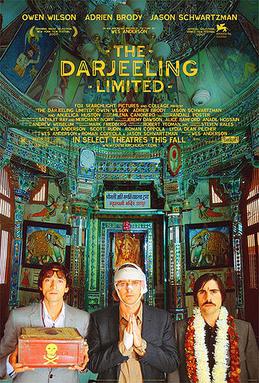
The Darjeeling Limited Review


Картинки по запросу darjeeling limited

The first reason why this movie is one of my favourites is because I love Wes Anderson’s style of filming. I don’t think there is nor ever was a director who chose the arrangement and design of his shots more precisely. Almost every frame in this movie reminded me of a painting, due to the combination of colours and the positioning. The colours used were mainly rich and bright, such as yellow, green, blue and red, which gave extra energy to the lively scenes of the film.

Despite of its light-hearted appearance The Darjeeling Limited is about a complicated, touching family story. The main characters are three brothers who went on a spiritual journey to rebuild the bonds between each other and find their mother who abandoned them. All these struggles were the consequences of their father’s death. It is a tale of love, trust and pain that is felt by those with no family to support them.  Such deep topics contrast greatly with the visual appearance of the film, so the resultant humour is entertaining and makes Anderson’s messages very memorable. Being a man for whom a family is in priority, I was interested in the events and lessons of the story.


And of course it was a perfect cast that made the movie so personal and remembering. Owen Wilson, Adrien Brody and Jason Schwartzman made a good job playing the brothers. Selection of the secondary actors was as successful, with Bill Murray and Anjelica Huston in two biggest supporting roles. These players, although very relaxed in their appearances, portrayed a long list of emotions over the two hours duration and made each character alive.

The majority of filming took part in Rajasthan, India, to capture the Asian landscapes and the according architecture. However, a lot of the scenes were shot in the studios of the Long Island, including all the actions inside the train and the flashbacks of the brothers’ past. 

So factors of the accurate work done by the director and the designer, the unusual storyline with intelligent dialogues and the talented cast make The Darjeeling Limited a true masterpiece and the second best Anderson’s movie (The Grand Budapest Hotel is still in the lead).

Sunday, 11 September 2016

How is tension created in thrillers - Analysis of Omerta

Omerta


Thriller is a genre related to mystery, violence and suspense, the aspects which aim to create tension in the audience’s minds.

In Omerta the tension is present because the character is in a deadly danger. He is on the roof of a very tall building, standing just on the edge. His position seems to be unstable, his body moves from side to side so it seems hard for the actor to keep the balance, which is the only thing that prevents him from the fall. The back noise is the sound of the strong wind and the actor’s shirt moves as if it is blown at from every direction. ,


The character himself looks innocent and his situation raises pity in the audience. His innocence is seen by the bright colours of his clothes, such as pale blue and white. They contrast with the dark costume of the villain. The death of innocent victims always causes feelings of anger and tension.
On 1:18 another lethal danger to the protagonist is introduced, a weapon in the hands of the villain.


 It is clarified that the bullet is intended for the first character. The tension builds when the antagonist uses his gun to force the decision making and the victim prepares to jump. A non-diegetic, frightening sound was used to emphasise the antagonist’s appearance, which made it clear that he intends to harm the jumper.


Then another factor that makes the audience feel sorry for the victim is introduced, it is a phone call followed by the actor’s sad reaction.


The crescendo arrives after someone knocks on the door and the villain rushes to finish his job. The sound of the wind becomes louder and the player’s shirt starts to move faster. His facial expression and body language are more decisive. No hope for a salvation is left after the last shot showed the antagonist preparing to use his gun.